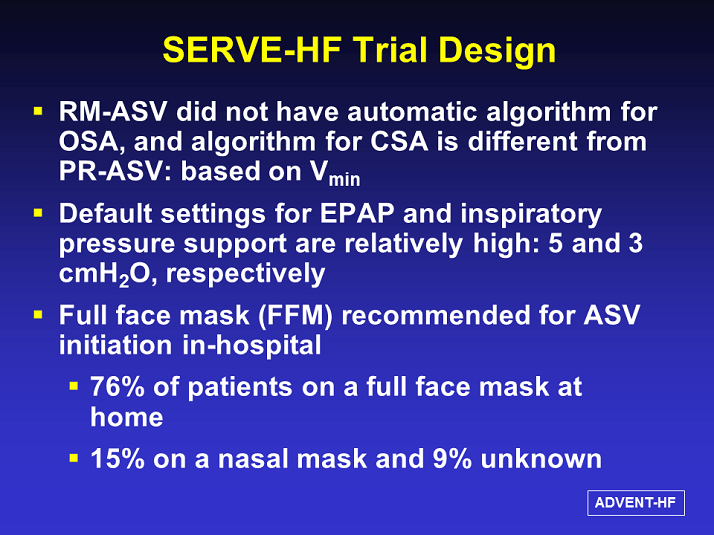
- Figure 27
SERVE-HF Trial Design 2
FIG. 27: The ASV device used in SERVE-HF did not have an automatic algorithm for OSA or for upper airway obstruction,[15] and the algorithm for CSA was based on measuring minute volume and ventilation, which is different from that in the ADVENT-HF device. The default settings for expiratory positive airway pressure (EPAP) and inspiratory pressure support were relatively high, at 5.0 and 3.0 cmH2O, indicating that on any given inspiration the minimum pressure the subject was experiencing is 8.0 cmH2O, which is relatively high.
The SERVE-HF trial initially mandated use of a full-face mask for ASV initiation in the hospital, and over the course of the trial, 76% of patients were on a full face mask at home.[13] Only 15% were on a nasal mask, and 9% they did not know what kind of mask they were using, but this means that in this study the subjects used primarily a full face mask.
References
Cowie MR, Woehrle H, Wegscheider K, et al. Adaptive servo-ventilation for central sleep apnea in systolic heart failure. Supplementary appendix. N Engl J Med. 2015; http://www.nejm.org/doi/suppl/10.1056/NEJMoa1506459/suppl_file/nejmoa1506459_appendix.pdf
Cowie MR, Woehrle H, Wegscheider K, et al. Adaptive servo-ventilation for central sleep apnea in systolic heart failure. N Engl J Med. 2015;373:1095–1105.