Criner - Figure 26
Effects of Oxygen Therapy on Other Morbidities of COPD
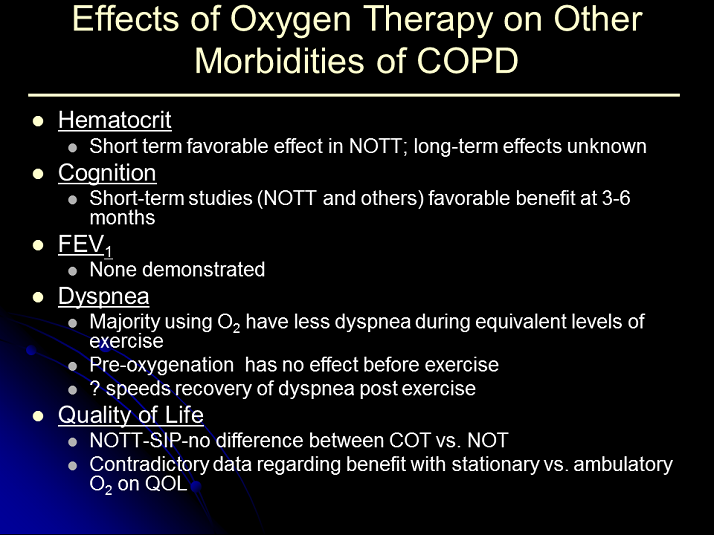
Fig. 26: This Figure shows that there are other effects of oxygen therapy on other comorbid conditions associated with COPD that may have some beneficial effects. Some studies have shown short-term favorable effects on reducing secondary polycythemia or reducing the hematocrit, as was demonstrated in the Nocturnal Oxygen Treatment Trial (NOTT) from the NHLBI. The long-term effects, however, of supplemental oxygen on changing hematocrit levels in COPD are not known. NOTT showed some short-term benefits of oxygen therapy on cognition at about 3–6 months. In contrast, however, no study has ever demonstrated that long-term oxygen therapy in COPD will improve lung function as measured by the FEV1.
In terms of dyspnea, the majority of studies have shown less dyspnea during equivalent levels of exercise with oxygen therapy compared to not using oxygen therapy; on the other hand, other studies have shown no effect of preoxygenation, ie, from taking oxygen before an exercise routine, or that using oxygen after an exercise routine will speed recovery of dyspnea post exercise. In sum, it appears that the benefit of oxygen therapy in patients with dyspnea has to be during the performance of the exercise.
In terms of quality of life, NOTT used a sickness impact profile score as a quality of life measure. There was no difference in quality of life between use of oxygen continuously or nocturnally. However contradictory evidence exists regarding the benefit of using stationary versus ambulatory oxygen therapy on quality of life, because it was thought that whatever effect oxygen might have, if it has to be tethered to a machine (whether stationary or carrying around a large, heavy machine to get supplemental oxygen), any benefit of supplemental oxygen for reducing dyspnea and improving functional status that would be negated by the need to use a more cumbersome device to deliver that therapy.