
International and Faculty Survey Comparison and Faculty Discussion
Discussion
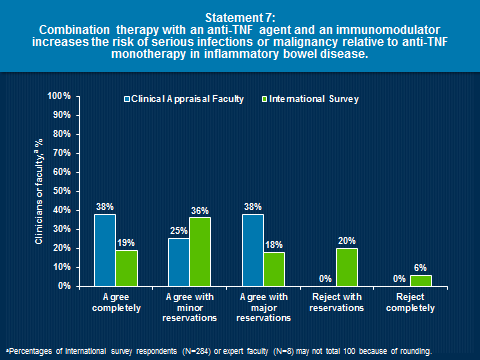
Overall, the most recent evidence indicates that concomitant IMM use does not increase the risk of infections in anti-TNF-treated patients with IBD (Table 1).2 Taken together, it appears that most, if not all, of the increased lymphoma risk associated with anti-TNF and immunosuppressant combination therapy may be attributable to the immunosuppressant agent, thiopurine (Table 1).1,2 In addition, combination therapy may further increase the risk of skin cancer attributed to anti-TNF monotherapy, but this will require further investigation (Table 1).19
| Serious infection risk | Lymphoma risk | Skin cancer risk | |
|---|---|---|---|
| Anti-TNF monotherapy | Yes | No | Yes for melanoma and probably for NMSC |
| Combination therapy with thiopurines versus anti-TNF monotherapy | Same | Increased | Increased for NMSC |