Bret Scher, MD - Figure 54
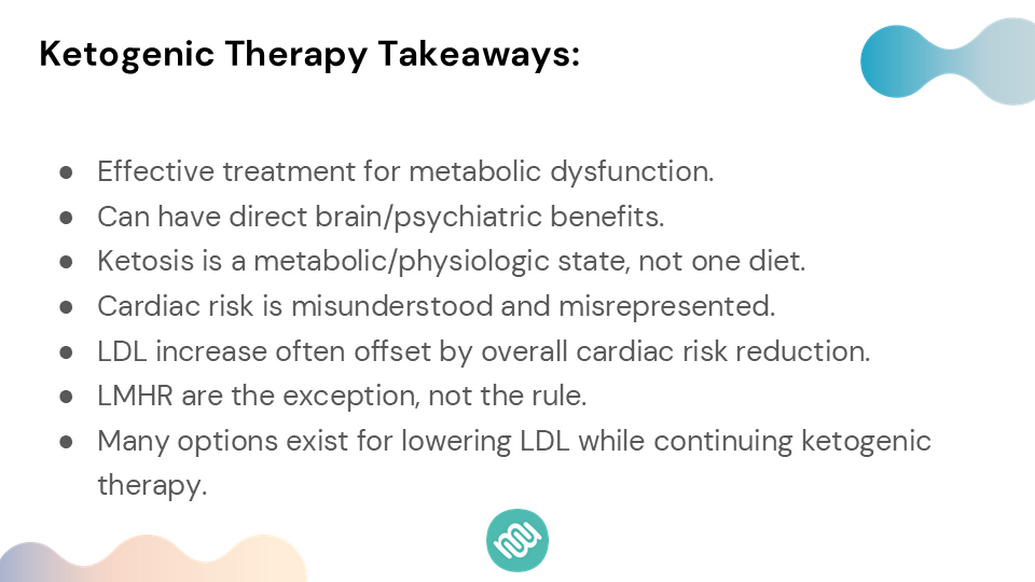
Ketogenic Therapy Takeaways:
What are the takeaways for both ketogenic therapy and the cardiovascular safety or risk of ketogenic therapy? The first is that ketogenic therapy is a very effective treatment for metabolic dysfunction: being able to improve triglyceride/HDL ratio, improve blood sugar and insulin levels, and put type 2 diabetes into remission. It can be a profound medical treatment for metabolic dysfunction. It can also have direct brain and psychiatric benefits, whether it's treating seizures or treating serious mental illness. There's emerging evidence that ketogenic therapy can be a very successful treatment in this area. But here's the key, and I probably should have started with this one. Remember, ketosis is a metabolic and physiologic state and not one diet. If we only think of ketosis as bacon and butter, we're missing the whole point that it actually changes our body's physiology – that we're now burning primarily fat for fuel and relying less on glucose for fuel. And we're creating ketones which the brain can use as an effective fuel source. We're completely changing our body's physiology, and we can do that with multiple different diets, whether it's a vegan diet, a vegetarian diet, a Mediterranean diet, omnivore diet, or carnivore diet. We can get into the state of ketosis as a medical, therapeutic intervention.
Then, when we talk about the cardiac risk of low-carb keto diets, it's often misunderstood and misrepresented by the studies I mentioned earlier, which included 25-37% of calories from carbohydrates and called it “low carb.” Further, they stated or implied that this is the same as keto, which is completely, medically false. When we're talking about a keto diet or a ketogenic intervention, it must be a true ketogenic intervention that changes our body's physiology. Remember the slide showing the pasta with sauce versus the salad with steak? One you can have on a keto diet, and one you can have on a so-called “low carb” diet with 150 grams of carbs. These two choices produce very different physiologic states: One will help you be in ketosis and one will not.
Next, the LDL increase: It usually does not happen with a ketogenic diet, as most of the data shows. But when there is an increase in LDL, it's often offset by the metabolic benefits that we see, which many of the studies show. Yes, there are lean mass hyper-responders, which take up a lot of oxygen and attention because of how dramatic their changes are, but they're the exception, not the rule. And, there's emerging evidence that maybe we need to see them a little bit differently than the general population.
Last, even if someone does have elevated LDL, there are many options that exist to address it, while continuing ketogenic therapy if that person is seeing significant benefits.