Recognizing and Treating Tracheobronchomalacia
Surgical Treatment of Tracheobronchomalacia: Part 2
Charles Bakhos MD, MBA, MS, FACS

Faculty Presentations

Charles Bakhos MD, MBA, MS, FACS
Maruti Kumaran, MD FRCR
Charles Bakhos MD, MBA, MS, FACS
Surgical Treatment of Tracheobronchomalacia: Part 2
Fig. 01 -
Medical Management
Fig. 02 -
Co-morbid conditions
Fig. 03 -
Reflux Study
Fig. 04 -
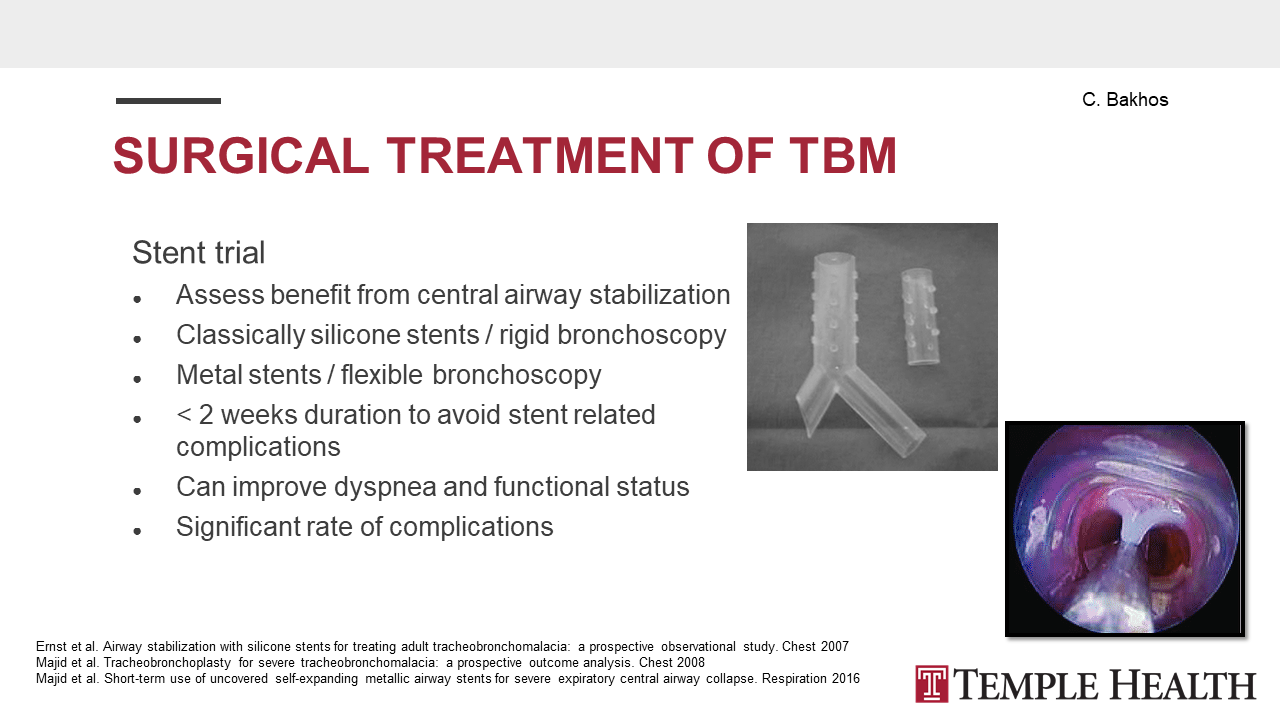
Stent trial
Fig. 05 -
Thermoablative techniques
Fig. 06 -
Treatment algorithm
Fig. 07 -
Multi-disciplinary approach
Fig. 08 -
Surgery for Airway Malacia
Fig. 09 -
Surgical approaches
Fig. 10 -
Surgical support history
Fig. 11 -
Practice foundation
Fig. 12 -
Goal of TBP
Fig. 13 -
Procedure details
Fig. 14 -
Open TBP
Fig. 15 -
Case Study
Fig. 16 -
Robotic advantages
Fig. 17 -
Case Study
Fig. 18 -
Posterior tracheopexy
Fig. 19 -
Outcomes of TBP
Fig. 20 -
Follow tangible valuables
Fig. 21 -
Historical perspective
Fig. 22 -
Perioperative outcomes
Fig. 23 -
Outcomes Measures
Fig. 24 -
Robot-assisted TBP
Fig. 25 -
Quality of life
Fig. 26 -
Obese patients outcomes
Fig. 27 -
Future directions
Fig. 28 -
Future advancements
Fig. 29 -
Contact Information
Fig. 30 -
Closing

« Prev
4 / 30
Next »
Print This Page
Enlarge Figure

Charles Bakhos MD - Figure 4

Stent trial

References

[2]

Ernst et al. Airway stabilization with silicone stents for treating adult tracheobronchomalacia: a prospective observational study. Chest 2007

[3]

Majid et al. Tracheobronchoplasty for severe tracheobronchomalacia: a prospective outcome analysis. Chest 2008

[4]

Majid et al. Short-term use of uncovered self-expanding metallic airway stents for severe expiratory central airway collapse. Respiration 2016

« Prev
4 / 30
Next »